



Did you know that nearly one in five high school students report having tried illicit drugs before graduation, according to recent studies? The numbers are a stark reminder that drug abuse and risky behavior among teens are not just abstract concerns—they are daily realities in classrooms across the country. But there is an encouraging movement underway: school-based prevention programs are helping to change the trajectory of youth drug use, promoting healthier habits, reducing risk behaviors, and setting the stage for positive social and emotional development. In this guide, we’ll dig deep into why prevention programs matter, how they work, and what schools and communities can do to protect—and empower—our youth.
Unveiling the Need: Why School-Based Prevention Programs Matter
Teen drug use is not just a fleeting phase—it can be the starting point of lifelong challenges ranging from health problems to academic setbacks and future risky behavior. Alarmingly, data from various gov websites estimate that substance abuse issues touch over 30% of adolescents before they enter adulthood. Schools play a frontline role; most students spend a significant portion of their developmental years within educational institutions, making schools uniquely positioned to address risk behavior and drug abuse before patterns become entrenched.
Equally pressing, schools are often the only consistent environments where prevention programs can reach a broad and diverse group of teens. The classroom’s influence can be leveraged to teach positive social norms and protective factors, helping students see that healthy choices are not just possible but also preferable. With intervention often happening too late in other community settings, the case for robust, well-structured school-based prevention programs becomes all the more compelling—offering a practical, scalable solution to mitigate risk factors and foster youth development.

Startling facts and statistics on teen drug use: Over 30% of teens report trying substances before age 18.
The role of schools: Schools are central to identifying risk behaviors early and guiding adolescents toward healthier choices.
What You'll Learn About School-Based Prevention Programs
Key takeaways on prevention programs
How high school students benefit from based prevention
Essential components of effective prevention program frameworks
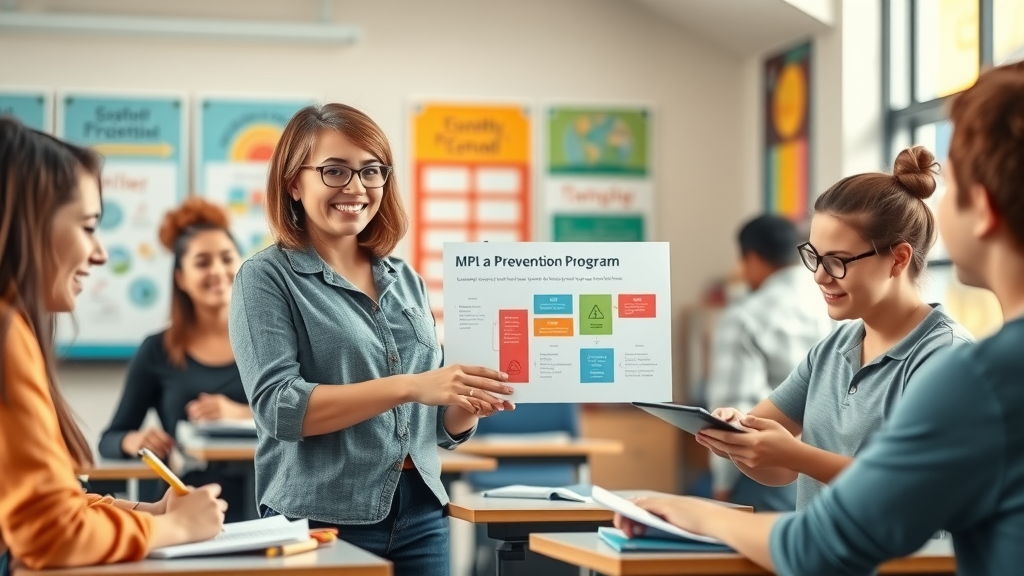
Defining School-Based Prevention Programs and Their Core Principles
School-based prevention programs are systematic interventions delivered primarily within educational settings like elementary schools, middle schools, and high schools. Their primary goal is reducing risk factors for substance abuse, conduct problems, and risky social behaviors while promoting protective factors such as strong decision-making, problem solving, and prosocial behavior. These programs can range from brief universal prevention initiatives to intensive targeted sessions for at-risk youth, all aimed at fostering mental health and improving academic and life outcomes.
Effective prevention programs incorporate evidence-based approaches, blending skills training, educational materials, and social development exercises. By engaging students in activities and discussions on risk behavior and underlying influences like peer pressure, stress, and self-esteem, schools can help students develop resilience and a positive self-identity. The core principles revolve around early intervention, inclusivity, cultural competence, and adaptability—ensuring that each program is tailored to meet the unique needs of its student population and local community.

Definition: Programs within schools aimed at reducing risk behaviors and substance use among youth.
Approaches: Focus on skills building, education, and changing social norms to prevent risk behaviors.
How School-Based Prevention Programs Address Teen Drug Use
The structure of school-based prevention programs is rooted in understanding the real-world pressures teens face—including exposure to drugs, evolving social norms, and fluctuating mental health. Programs are designed around the unique calendars and cultures of high school and middle school students, integrating seamlessly into health, physical education, and even science classes. Many high schools implement universal prevention models, meaning every student is involved, not just those deemed “high risk.”
Implementation involves short lessons, ongoing group discussions, and the practical application of health-promoting strategies. Teachers, school counselors, and sometimes peer leaders guide students through curricula focusing on understanding risk factors, resisting peer influence, and recognizing the consequences of substance abuse and risk behaviors. Regular evaluations, surveys, and feedback sessions ensure that the interventions remain effective and responsive. By tapping into the trusted relationships between teachers and students, these programs significantly increase the likelihood of engagement and long-term behavioral change.
Program structure: Substance abuse prevention is woven into daily learning through collaboration and open discussion.
Implementation: Focused on continuity, peer support, and reflective practice among high school populations.
Types of School-Based Prevention Programs: Strategies and Models
School-based prevention programs come in various formats, each with strengths and areas of emphasis. Common categories include universal prevention (for all students), selective approaches (for at-risk groups), and indicated programs (for students showing early signs of risky behavior). Within these, models often emphasize social skills training, interactive learning, and family engagement. Peer-led interventions harness the influence of student role models, while adult-led programs often draw on the experience of teachers and counselors.
Research indicates that peer-led programs can be especially impactful in reducing risk behaviors by normalizing positive choices and encouraging open dialogue about social pressures. On the other hand, adult-led models excel in integrating curriculum-wide consistency and leveraging professional development. School districts frequently blend these approaches, customizing their prevention programs to address community-specific risk factors and opportunities for youth development.

Comprehensive list of based prevention program categories
Social skills training models
Peer-led vs. adult-led programs for risk behavior reduction
Comparing Major School-Based Prevention Programs |
|||
Program Name |
Approach |
Target Group |
Effectiveness |
|---|---|---|---|
LifeSkills Training |
Social skills, resistance training, problem solving |
Middle & High School |
High – significant reduction in substance use and conduct problems |
Too Good for Drugs |
Social and emotional, skill building, positive social behavior |
Elementary to High School |
Moderate to high – improves prosocial behavior, reduces drug abuse |
Project ALERT |
Classroom-based prevention, peer leadership focus |
High School |
Moderate – lowers initiation rates for risky behavior and substance use |
Peer Assistance & Leadership (PAL) |
Peer-led, mentoring, universal prevention |
High School |
Moderate – increases protective factors, youth development |
Key Components of Effective School-Based Prevention Programs
The success of any school-based prevention program hinges on three core elements: skills training, parental engagement, and rigorous, ongoing evaluation. Skills training equips students with real-world tools to resist peer influence, manage stress, and problem solve effectively. Parental engagement ensures prevention doesn’t stop at the school gate; when families reinforce positive social behaviors at home, students experience consistent, layered support. Regular evaluation—data-driven assessments of program impact—allows for rapid adaptation, keeping methods current and relevant in the face of changing risk factors and student needs.
When combined, these elements foster environments where risky behavior is less likely to flourish. Schools that invest in teacher professional development, foster strong family–school communication, and implement evidence-based youth development frameworks consistently see decreases in conduct problems and substance abuse, and an increase in student mental health and academic performance.

Skills training, parental involvement, and ongoing evaluation are crucial.
Evidence-based methods provide trackable results in risk behavior reduction.
Evidence-Based Practices in School-Based Prevention
Scientific research forms the foundation of modern prevention program models. Evidence-based approaches—like LifeSkills Training and Project ALERT—are rigorously tested, showing consistent positive outcomes in high school environments versus non-based or ad hoc prevention strategies. Schools implementing these programs see measurable improvements not just in reducing substance abuse, but also in supporting mental health, increasing academic engagement, and enhancing social and emotional skills.
Why do evidence-based practices work? They use structured curricula, active student participation, and integrate universal prevention with targeted interventions. This multidimensional approach is tailored to address multiple risk and protective factors, improving the overall behavioral health landscape within the school district. Ultimately, the goal isn't just to prevent drug use, but to empower students with lifelong skills and resilience.
Application of scientific research ensures program credibility and consistent positive results.
Compared to non-based programs, evidence-based prevention programs achieve higher success rates in reducing risk behaviors.
Case Examples: Successful School-Based Prevention Programs in Action
Across the country, dozens of based prevention programs have transformed schools and communities. For instance, a high school in Oregon implemented the LifeSkills Training curriculum for its freshmen. Within three years, reported substance abuse dropped by nearly 40%, and surveys showed higher rates of prosocial behavior and improved academic performance. In another case, a Texas school district used the Peer Assistance and Leadership (PAL) program, pairing upperclassmen with at-risk students—resulting in improved self-confidence and fewer conduct problems.
Real-world success stories highlight the scalability of prevention program frameworks. When programs are embedded school-wide, involve families, and receive ongoing evaluation, outcomes consistently show lower rates of risk behavior, better youth development, and greater student resilience. While individual details may vary, the underlying factors—community engagement, teacher involvement, and evidence-based strategies—remain the same.

LifeSkills Training led to a 40% reduction in substance use in one high school.
Peer Assistance & Leadership increased prosocial behavior and confidence among at-risk students.
"Engaging students early through school-based prevention programs profoundly shifts the trajectory of youth risk behaviors."
– Leading adolescent health researcher
Challenges and Limitations of School-Based Prevention Programs
Despite the clear benefits, there are real-world obstacles to implementing school-based prevention programs in many school districts. Budget limitations, resistance to program adoption, and difficulties in adapting curricula for diverse student populations present ongoing challenges. Some schools lack the resources for sustained teacher training or do not prioritize prevention due to other pressing academic concerns. Student engagement levels can also fluctuate, particularly when a prevention program feels disconnected from students’ real-life experiences or cultural backgrounds.
These challenges can be compounded in schools serving high-need communities, where behavioral health issues and multiple risk factors intersect. Additionally, ensuring consistent evaluation and long-term sustainability can be difficult without dedicated staff or external support from gov websites and community organizations.

Barriers: Funding, program adaptation, student engagement, and staff training.
Sustainability and scalability can be limited without district and community investment.
Overcoming Implementation Barriers
To improve program fidelity and outcomes, schools can focus on several key strategies: invest in ongoing professional development for teachers; adapt materials for cultural and linguistic inclusivity; and involve students in shaping prevention content. Flexible delivery modes—blending in-person, digital, and peer-facilitated sessions—may also support broader engagement. Partnerships with local health agencies and families can help to secure necessary funding and resources, ensuring that programs remain current and relevant despite changing school demographics or evolving risk behaviors.
Finally, gathering regular feedback from students, educators, and families enables schools to continuously refine their prevention programs, ensuring alignment with student needs and community priorities. Innovative school districts often share their insights and curricula via online platforms or conferences, strengthening the broader prevention ecosystem and ensuring positive youth development is within every school's reach.
Professional development and community partnerships drive successful, sustainable prevention program adoption.
Adapting programs for diversity and soliciting student input increases relevance and engagement for all populations.
Evaluating the Long-Term Impact of School-Based Prevention Programs
Tracking the long-term outcomes of school-based prevention programs is crucial for demonstrating their value and refining their approaches. Most successful schools use a combination of surveys, behavioral data, and academic records to measure the impact of prevention initiatives. Metrics like decreased substance abuse rates, improved attendance, and fewer incidents of conduct problems are common markers of progress. Additionally, collecting input from students and teachers provides richer context for understanding what works and what needs adjustment.
Longitudinal studies indicate that high-quality prevention programs benefit not only the immediate participants, but also the broader student body by creating safer, more supportive school environments. These improvements may also extend beyond graduation, reducing risk behavior and related health problems well into adulthood. Transparent, data-driven evaluation processes help to attract further funding, engage stakeholders, and drive a culture of continuous improvement.

Outcomes tracked: Decreased drug use, improved academic performance, better mental health.
Success is measured by sustained reductions in risk behaviors and stronger protective factors.
Integration with Community and Family: Making Prevention Programs Stronger
Schools do not exist in isolation—families and communities provide essential support for any successful prevention program. Parents reinforce the skills and attitudes introduced at school, while community organizations supply resources, mentoring, and real-world context for prevention messages. Programs that involve families—from parent information nights to at-home activities—see higher student participation and better long-term results.
Effective integration often means building coalitions among educators, public health workers, youth development agencies, and law enforcement, ensuring a unified approach to risk behavior reduction. This comprehensive network not only supports students but also addresses broader social determinants of health, from poverty to housing security, maximizing every protective factor available.

Families reinforce prevention messages and offer support at home.
Community groups provide additional resources, mentorship, and program sustainability.
Family and Community Involvement Approaches in School-Based Prevention Programs |
||
Approach |
Who’s Involved |
Benefit |
|---|---|---|
Parent Workshops |
Schools, families |
Greater knowledge of risk factors and prevention strategies |
Community Mentorship |
Youth organizations, health agencies |
Expanded support network and positive role models |
Joint School–Community Task Forces |
Educators, law enforcement, health professionals |
Unified efforts for reducing risk behaviors and sharing resources |
Family Homework Activities |
Parents, students, teachers |
Strengthened protective factors and improved communication |
People Also Ask: School-Based Prevention Programs FAQ

What is an example of a school-based prevention program?
A widely recognized example is LifeSkills Training (LST). This evidence-based program provides students with critical skills training in decision-making, problem solving, and resisting peer pressure. Evaluations show that LST can reduce drug abuse and risky behaviors by up to 50% in some high schools, leading to healthier, more resilient teens.
LifeSkills Training: Combines skills training, social and emotional learning, and interactive activities.
Proven effective in reducing substance abuse and conduct problems among students from diverse backgrounds.
What are school-based drug prevention programs?
School-based drug prevention programs aim to educate students about the dangers of substance abuse, foster healthy decision-making, and build resistance skills before risky behavior becomes ingrained. These prevention programs target high school students through a mix of classroom lessons, group discussions, and interactive skills training. Strategies focus on promoting protective factors, reducing exposure to risk factors, and fostering a supportive school environment.
Integrate education about drugs and addiction with skills for resisting peer pressure.
Include ongoing support and evaluation to ensure sustained impact on both academic and behavioral health outcomes.
What are examples of prevention programs?
Examples abound:
D.A.R.E. – Focuses on personal responsibility and the risks of drug use for elementary school students.
Too Good for Drugs – Used at all grade levels, emphasizing social skills and prosocial behavior.
Project ALERT – Targets high schools, utilizing peer-led instruction and group activities.
Second Step – Centers on social and emotional skills to prevent conduct problems and risky behavior.

What are school-based programs?
School-based programs encompass more than just prevention—they include interventions for mental health, social and emotional development, skills training, and support for reducing conduct problems and risky behaviors. Based prevention is just one piece; schools may also offer academic tutoring, professional development for staff, and services to support healthy youth development across a wide range of social behaviors.
Scope: From drug abuse prevention to broader skill-building and risk behavior intervention.
Goal: Equip youth with knowledge, tools, and confidence to make healthy choices both inside and outside the classroom.
Frequently Asked Questions About School-Based Prevention Programs
How do prevention programs impact high school students?
High-quality school-based prevention programs foster critical life skills, improve academic performance, and reduce both conduct problems and substance abuse. They help create safer, more supportive learning environments for all.What skills training is most effective in prevention?
Evidence suggests that decision-making, peer resistance, emotional regulation, and conflict-resolution skills are the most effective in deterring risky behavior and supporting prosocial development among teens.Do prevention programs work long-term?
Yes—when implemented with fidelity and adapted to evolving needs, school-based prevention programs deliver long-term reductions in risk behavior and substance use, while promoting protective factors that last into adulthood.
Key Takeaways for Educators, Parents, and Policymakers
The urgent need for school-based prevention programs is clear: early intervention is essential.
Evidence-based strategies—skills training, parental involvement, ongoing evaluation—yield the best results in high school settings.
Collaborative efforts among schools, families, and communities are critical in reducing risk behaviors and supporting youth development.
Join the Movement: Advocate for School-Based Prevention Programs in Your Community
Now is the time to champion proven, school-based prevention programs and ensure every teen has the support they need to make healthy choices for life.




Write A Comment