


Add Row
Add Element
cropper
update

Troubled Teen Solutions

update
Add Element
  • Home
  • Categories
    • Understanding Teens
    • Parenting Strategies
    • Mental & Emotional Health
    • Family Relationships
    • Education Challenges
    • Risky Behaviors
    • Online Habits
    • Healthy Outlets
    • Parent Support
    • Professional Resources
  • Raising Kids Well
Add Element
UPDATE
April 10.2026
1 Minute Read

Authoritative Parenting vs. Authoritarian Parenting: Key Differences

Did you know that children raised with authoritative parenting are twice as likely to develop strong social skills and self-esteem compared to those brought up in authoritarian households? This statistic highlights how fundamental your parenting style is in shaping your child’s future. In this comprehensive guide, we’ll demystify the differences between authoritative parenting and authoritarian parenting, unveil what the research says, and help you determine which approach best supports your child’s growth and happiness.

Startling Statistics on Authoritative Parenting vs. Authoritarian Parenting

Studies consistently reveal major developmental distinctions between children raised by authoritative parents and those raised by authoritarian parents. For instance, children of authoritative parents tend to excel academically, exhibit higher self-confidence, and demonstrate strong emotional regulation. In contrast, research shows that children of authoritarian parents often face increased anxiety, struggle with social relationships, and lack the autonomy necessary for sound decision-making. The statistics are clear: authoritative parenting fosters a balanced environment, while authoritarian approaches may inhibit autonomy and dampen self-esteem. These numbers solidify the monumental role that parenting style plays in child development.

Quantitatively, recent surveys indicate that while only 25% of children from authoritarian homes report positive mental health, more than 60% of children raised authoritatively report high life satisfaction. From academic achievement to mental health stability, the difference in outcomes remains consistently in favor of authoritative parenting. This stark statistical gap not only underscores the importance of awareness but also drives the urgency to reflect on your own parenting tendencies for your child’s well-being.
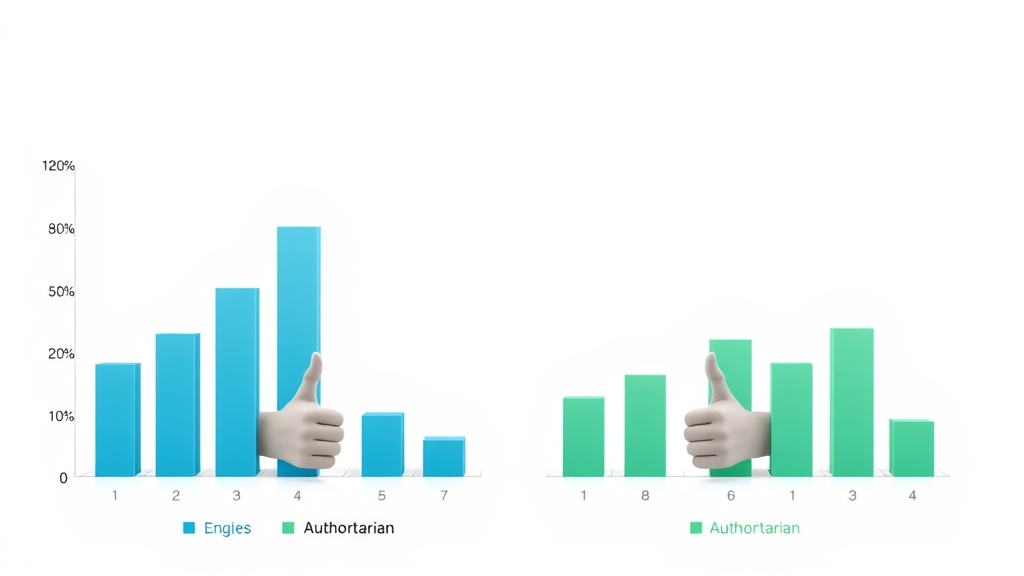
Bar graph infographic contrasting statistics between authoritative parenting and authoritarian parenting outcomes in children. Authoritative bar rises higher, authoritarian bar is lower. Soft blue and green modern vector art, no faces, photorealistic texture.

What You'll Learn in This Guide to Authoritative Parenting vs. Authoritarian Parenting

  • The main differences between authoritative parenting and authoritarian parenting

  • How each parenting style affects child development

  • Real-world examples of authoritative parent and authoritarian parent approaches

  • Expert insights and research, including the work of Diana Baumrind

Understanding Parenting Style: The Foundations of Authoritative Parenting vs. Authoritarian Parenting

Diverse family having a relaxed conversation in a sunlit living room, portraying warmth and attentive parenting dynamics, connected to parenting style and authoritative parent concepts.

Definition of Parenting Styles

Parenting style refers to the consistent strategies, attitudes, and behaviors that parents use to raise their children. According to experts, notably psychologist Diana Baumrind, there are four primary parenting styles: authoritative, authoritarian, permissive, and uninvolved. Each style blends various levels of responsiveness—how attuned parents are to their child’s emotional needs—and demandingness—how much they set and enforce rules. This combination results in clear distinctions in how parents tend to discipline, communicate, and show affection. An authoritative parent is both responsive and demanding, balancing boundaries with warmth. In contrast, an authoritarian parent is highly demanding but often unresponsive, emphasizing rules and obedience over open communication or emotional support.

Understanding these styles is crucial in recognizing the far-reaching implications on child development and overall child development. Studies consistently show that parenting styles set the foundation for a child's confidence, social skills, and even mental health. By identifying your primary approach, you can proactively shape a more supportive environment that meets your child's evolving needs. This foundation allows parents to make informed decisions, adapt their strategies, and foster a healthy relationship between parent and child—ultimately optimizing their child’s trajectory in life.

The Role of Parenting Styles in Child Develop and Child Development

Child psychologist points at a chart showing four parenting styles in a bright, organized office, highlighting authoritative vs authoritarian parenting for child development.

Every parenting style directly influences the way a child perceives themselves, forms relationships, and responds to challenges. When parents strike a balance between support and structure, as seen in authoritative parenting, they nurture children who are self-reliant and socially adept. In contrast, children raised under authoritarian parenting—which focuses on strict rules, demands, and low responsiveness—frequently struggle with anxiety, low self-worth, and poor problem-solving skills. Diana Baumrind’s research positions the authoritative style as optimal for supporting healthy psychological and social outcomes.

Beyond Baumrind’s pioneering work, modern research in child development reveals that supportive and consistent parenting styles correlate with fewer behavioral problems, higher academic achievement, and improved mental health. The way parents respond to mistakes, encourage exploration, and communicate expectations fundamentally shapes the core of child develop and resilience. Therefore, choosing the right parenting approach is not just about discipline—it’s about setting the stage for lifelong well-being and success for your child.

Authoritative Parenting vs. Authoritarian Parenting: A Detailed Comparison

Split-scene of two parents with children: one parent using warmth (authoritative), the other stern (authoritarian), in contrasting living room settings illustrating differences in parenting style and outcomes.

Key Characteristics of Authoritative Parenting

  • High responsiveness

  • Clear and reasonable boundaries

  • Encourages independence

Friendly, supportive authoritative parent coaches child on homework in bright, inviting kitchen, embodying positive reinforcement and open communication.

Authoritative parents are known for balancing high expectations with genuine warmth and support. They set clear rules, but these boundaries come with discussions that encourage reasoning and understanding. Rather than relying on fear or harsh punishment, authoritative parents focus on guiding children toward independence, using positive reinforcement and open, two-way communication. This style fosters mutual respect—children raised by authoritative parents tend to be confident, self-reliant, and empathetic. They know why the rules exist and are empowered to express themselves and make mistakes in a supportive environment.

Moreover, the authoritative parenting style encourages lifelong learning. These parents don’t just impart knowledge; they model how to listen, solve problems, and adapt to new situations. A child with an authoritative parent learns to manage emotions, handle setbacks, and build healthy relationships—with parents acting as guides rather than dictators. It’s a style that cultivates resilience and character, providing a secure base from which a child can confidently explore the world while knowing they always have support to fall back on.

Key Characteristics of Authoritarian Parenting

  • High demands with low responsiveness

  • Strict rules and expectations

  • Emphasis on obedience and authority

Stern authoritarian parent points to a list of rules in a tidy, cold modern kitchen; serious mood highlights low responsiveness and emphasis on obedience.

Authoritarian parents stress discipline above all else. With an inflexible approach, they enforce strict rules and expect immediate compliance—because they said so. Emotional connection and warmth are minimal; instead, emphasis is placed on obedience, order, and respect for authority. These parents typically discourage questions, rely heavily on punishment, and seldom explain the reasons behind their expectations. As a result, children of authoritarian parents often lack self-esteem, show less initiative, and experience anxiety or frustration due to constant pressure to meet high standards without meaningful guidance or emotional support.

While this authoritarian style can sometimes yield short-term compliance, the long-term effects can be detrimental in child development. Without open communication or room for self-expression, children raised under authoritarian parenting may develop social awkwardness, struggle to advocate for themselves, and have difficulty forming trusting relationships. The rigidness may inadvertently drive these children to rebel in adolescence or adulthood, and it seldom nurtures the critical thinking required to make sound judgments independently. In essence, authoritarian parenting sacrifices a child’s autonomy in favor of superficial obedience.

Authoritative Parent vs. Authoritarian Parent in Action

Picture a scenario where a child comes home with a poor report card. An authoritative parent might calmly ask the child about challenges encountered, discuss possible solutions, and work together to set realistic academic goals—demonstrating support and fostering problem-solving. In contrast, an authoritarian parent may punish the child for not meeting expectations without conversation, emphasizing consequences over understanding. This real-world difference impacts not only the child’s present emotions but their lifelong coping skills and self-worth. It illustrates how authoritative parenting drives growth while authoritarian parenting may provoke resentment or fear.

This “in action” contrast extends to daily decisions, communication, and even discipline. Authoritative parents tend to foster open communication, making family discussions the norm. In contrast, authoritarian parents often expect silent compliance, sidelining a child’s voice. Over time, these two approaches create dramatically different family atmospheres—one collaborative, the other hierarchical and potentially isolating. The power of parenting style is most apparent in these everyday moments, where children learn not only about rules, but about respect, trust, and emotional intelligence.

The Impact of Authoritative Parenting vs. Authoritarian Parenting on Child Development

Children from diverse backgrounds laugh and play confidently together outdoors, representing positive impact of authoritative parenting on child development.

Research Insights: Diana Baumrind’s Theory on Parenting Styles

"Authoritative parents are both demanding and responsive; authoritarian parents are demanding but unresponsive." – Diana Baumrind

Diana Baumrind’s foundational research into parenting styles transformed how psychologists, educators, and parents understand child development. Her evidence-based theory highlights how authoritative parenting optimally combines high expectations with warmth and responsiveness, whereas authoritarian parenting skews heavily toward demands and discipline, with little emotional support. According to Baumrind, this crucial difference directly impacts a child's ability to mature into a well-adjusted adult. She found that children of authoritative parents tend to outperform their peers—academically, emotionally, and socially—while those raised under authoritarian parents often struggle with anxiety, internalized stress, and lack autonomy.

Today, Baumrind's legacy provides the framework for most parenting research, validating that supportive yet structured environments are essential for fostering resilience, motivation, and empathy. Her work is a clarion call for parents to reflect on their approach and cultivate responsiveness alongside discipline. The data is clear: the way you set rules and respond to your child’s needs profoundly determines their mental health, happiness, and long-term success.

Child Develop: Psychological and Social Outcomes

Reflective adolescent journals in a calm, sun-dappled bedroom, symbolizing psychological well-being linked to authoritative parenting and positive child development.

The psychological and social outcomes for children are deeply shaped by their parents’ approach. Children of authoritative parents consistently report higher self-esteem, superior emotional regulation, and better academic performance. These children tend to handle setbacks more effectively and are less likely to develop behavioral problems. In contrast, children of authoritarian parents may comply with rules out of fear rather than understanding, increasing their risk for anxiety, depression, and social withdrawal. The data links authoritarian parenting with lower creativity and weaker social skills, underscoring the risks of overemphasis on order without affection.

This contrast is especially evident during adolescence. As young people seek independence, those from authoritative homes tend to assert themselves in healthy, adaptive ways, while those from authoritarian backgrounds may either become overly passive or rebel in unhealthy ways. Ultimately, the parenting style you choose is a blueprint for your child’s worldview—shaping their mental health, emotional stability, and capacity for fulfilling relationships throughout life.

Comparing Authoritative and Authoritarian Parenting Across Cultures

Photorealistic collage of global families from diverse cultures engaging in parenting, showcasing both authoritative and authoritarian approaches across different cultural backgrounds.

Although authoritative and authoritarian parenting are found in cultures around the globe, their expression—and impact—can vary based on societal norms. For example, certain cultures may value conformity, respect for elders, and group harmony, which can align with traits of the authoritarian parenting style. However, in many modern societies, a shift towards open communication and child autonomy has elevated authoritative parenting as the gold standard. Despite cultural differences, research consistently finds that children benefit most from parenting environments that blend clear expectations with warmth and support.

It's important to recognize that culture shapes not only our values but also how we respond to our children’s needs. The core characteristics of authoritative parenting—flexibility, empathy, and respect—transcend cultures, fostering resilience and adaptability in children worldwide. Meanwhile, excessive reliance on authoritarian methods, regardless of context, often stifles self-expression and can harm mental health. The best results occur when parents adapt global insights to their unique cultural settings, creating a supportive foundation for growth and well-being.

Side-by-Side Comparison: Authoritative Parenting vs. Authoritarian Parenting

Aspect

Authoritative Parenting

Authoritarian Parenting

Boundaries

Clear, reasonable; explained and discussed

Rigid, inflexible; non-negotiable

Discipline

Focused on guidance & positive reinforcement

Punishment-focused, may use corporal punishment

Communication

Open, two-way, respectful

One-way; parent dictates terms

Effects on Child Development

Confidence, social skills, autonomy

Anxiety, compliance, low self-esteem

Misconceptions and Common Myths About Authoritative Parenting vs. Authoritarian Parenting

  • Authoritarian parents are always strict and cold – myth debunked: While authoritarian parents emphasize discipline, some may show conditional warmth, though their style tends to prioritize obedience over emotional connection.

  • Authoritative parenting is permissive – myth debunked: In reality, authoritative parenting combines high expectations with support, while permissive parenting lacks consistent rules and boundaries.

Influence of Permissive Parenting and Other Parenting Styles

Permissive Parent vs. Authoritative Parent

  • Laissez-faire attitude of permissive parents: Permissive parents are highly responsive but set few boundaries, often struggling to enforce rules or consequences. This lack of structure can lead to behavioral challenges, as children test limits and struggle to develop self-discipline.

  • Potential outcomes for children: Children raised by permissive parents may initially enjoy greater freedom but often lack coping mechanisms for real-world stress. They are more likely to face difficulties with authority, impulse control, and academic performance when compared to children raised through an authoritative parenting style.

Permissive parent relaxes on sofa as children play freely in a slightly messy living room, illustrating differences from authoritative parenting.

By examining the continuum from permissive to authoritarian—and the balanced midpoint of authoritative parenting—it becomes easier to understand how your parenting decisions can steer your child's mental health and social outcomes. While each style reflects a different approach to discipline and affection, the authoritative method stands out for promoting growth within secure, clearly communicated boundaries.

Real-Life Examples: Authoritative Parent and Authoritarian Parent Scenarios

Parent kneels to calmly resolve conflict with an upset child, highlighting the contrast in conflict resolution styles between authoritative and authoritarian parenting.

Let’s say a child refuses to do chores. An authoritative parent might sit down with the child, listen to their feelings, and collaboratively set chores and rewards, teaching responsibility while respecting the child’s perspective. Meanwhile, an authoritarian parent would likely enforce chores with threats or immediate punishment, expecting obedience without input. These contrasting scenarios reveal the enormous impact parenting style has on a child’s autonomy, sense of security, and long-term trust in authority figures.

Another real-life contrast can be seen during conflict resolution. Authoritative parents demonstrate patience and empathy, encouraging children to express their emotions, while guiding them toward solutions. In authoritarian households, conflicts may end in ultimatums or withdrawal of privileges—missing the opportunity to teach compromise, emotional intelligence, or mutual respect. Over time, these everyday differences reinforce the divergent outcomes seen in studies on authoritative parenting vs. authoritarian parenting.

People Also Ask About Authoritative Parenting vs. Authoritarian Parenting

What is the main difference between authoritative parenting and authoritarian parenting?

The main difference lies in responsiveness and communication. Authoritative parenting balances high expectations with warmth, guidance, and two-way communication, encouraging children’s independence. Authoritarian parenting enforces strict rules, demands obedience, and often lacks emotional connection or explanation, leading to compliance out of fear rather than understanding. This distinction directly shapes a child’s confidence and mental health outcomes.

What is an example of authoritarian parenting?

An example of authoritarian parenting is a parent who imposes a bedtime with no discussion, simply stating, “Because I said so.” If the child questions the rule, the parent may respond harshly or discipline the child for challenging authority. There’s little room for the child’s input, and the emphasis is on obedience above all else, often enforced with consequences or punishment.

What is the most effective parenting style?

Research, including the findings of Diana Baumrind, supports authoritative parenting as the most effective overall. It blends high expectations with support, explains the reasoning behind rules, and encourages dialogue. This approach has been linked to the best child development outcomes—fostering autonomy, academic achievement, emotional intelligence, and positive mental health.

What are the 4 parenting styles?

Visual guide to four parenting styles: authoritative, authoritarian, permissive, and uninvolved; each style visually represented by parental figures and contextual backgrounds, including books and rule chart.

The four classic parenting styles are: Authoritative (high responsiveness, high demands), Authoritarian (low responsiveness, high demands), Permissive (high responsiveness, low demands), and Uninvolved (low responsiveness, low demands). Each approach differentially impacts a child’s psychological, social, and emotional development.

Frequently Asked Questions About Authoritative Parenting vs. Authoritarian Parenting

  • Can parenting styles change over time?
    Yes, parenting styles can evolve as parents gain insight, education, or adapt to their child’s unique needs. It’s never too late to shift toward a more effective style, such as authoritative parenting.

  • Does authoritative parenting work with teenagers?
    Absolutely. Authoritative parenting helps teenagers develop autonomy and responsibility, while preserving a strong parent-child bond based on mutual respect and open communication.

  • Are authoritative and authoritarian parenting culturally relative concepts?
    While these terms are rooted in Western psychology, they are observed across cultures. However, cultural norms can influence how parenting styles are expressed and perceived.

Key Takeaways on Authoritative Parenting vs. Authoritarian Parenting

  • Authoritative parenting fosters balanced development; authoritarian parenting can hinder autonomy

  • Parenting style profoundly affects child development outcomes

Making Informed Choices for Your Parenting Style

Reflect on your parenting approach and consider shifting toward authoritative techniques to support your child’s lifelong success and well-being. The right style today shapes your child’s future tomorrow.


Parenting Strategies

Write A Comment

*
*
Please complete the captcha to submit your comment.
Related Posts All Posts

Helping a Teen Who Lies, Sneaks Out, or Breaks Trust

Why do even the most loving, prepared parents grapple with teen lying and trust issues—and what can you do to help your teen come clean and rebuild your relationship? Many parents are blindsided when a child starts sneaking out, telling lies, or breaking family rules. But the truth is, even the best families encounter these challenges during adolescence. This article demystifies why teens lie, the ripple effect it has on families, and delivers step-by-step strategies to foster honesty, communication, and lasting trust. Opening Inquiry: Why Do Teen Lying and Trust Issues Challenge Even the Most Prepared Parents? Dealing with teen lying and trust issues isn’t just a parenting headache – it’s a profound challenge that can shake the foundation of the parent-teen bond. Even the most attentive, engaged parents can suddenly find themselves struggling when their trustworthy child begins sneaking out, spinning stories, or hiding important truths. Why does this happen? The teenage years are a whirlwind of emotional, social, and physiological changes. Teens begin questioning boundaries, experimenting with independence, and asserting their own identities. In this turbulent phase, teens lie for various reasons: to avoid punishment, fit in with peers, manage stress, or shield their privacy. What makes these lying issues especially difficult is how they threaten the sense of safety and connection within the family. Parents often experience a mix of anger, disappointment, and uncertainty—wondering if they’ve failed or worrying what will come next. Yet, understanding that lying and sneaky behavior are not always a sign of delinquency, but rather a developmental hurdle, can help families rebuild trust and cooperation. With the right knowledge and tools, you can turn these challenges into opportunities for growth, transforming broken trust into a foundation for stronger, lifelong relationships. Understanding the Teenage Mind: The Roots of Teenage Lying and Trust Issues Teenage lying isn’t born out of “badness” or malice. Instead, it springs from a mix of psychological and developmental factors. Adolescents are hardwired to test limits, seek autonomy, and protect their growing sense of self. When the impulse for independence clashes with parental expectations or strict house rules, some teens turn to dishonesty or sneakiness as a coping mechanism. For many, a white lie might seem easier than an uncomfortable truth, especially when the cost of honesty feels too steep. Fear of punishment, embarrassment, or letting parents down can all drive a lying teen to conceal the truth. Further complicating matters, young adults are still developing impulse control and problem-solving skills. Their brains, particularly areas responsible for foreseeing consequences and weighing risks, continue maturing well into their twenties. As a result, teens may lie to avoid immediate discomfort, without grasping the long-term cost to trust. In some cases, persistent lying signals deeper social or emotional struggles, including anxiety or low self-esteem. By taking a compassionate, curious approach, you can begin to understand the “why” behind your teen’s lying—and open doors to honest, supportive conversations. The Impact of Trust Issues: Family Relationships and Teenage Lying When trust is fractured by lies or secrecy, both parents and teens feel the effects acutely. Parents may become hypervigilant, second-guessing every word or action, while teens might feel misunderstood, resented, or unfairly punished. Hostile confrontations and power struggles can become the norm, leading to further breakdowns in communication. Over time, this stress can erode the warmth and closeness that families need to thrive. Importantly, unresolved trust issues can have ripple effects beyond the family. Teens who build a pattern of lying may find it hard to maintain friendships, struggle with authority figures, or develop poor self-esteem. The cycle of accusation and deceit threatens their ability to form trusting relationships both now and as young adults. Recognizing the emotional impact of teenage lying is the crucial first step in building a healthier, more understanding dynamic between parent and child. Open dialogue and consistent, fair responses can pave the way toward healing and renewed trust. As you work to understand the underlying causes of your teen's dishonesty, it's also helpful to consider practical ways to manage your own stress during these challenging times. For actionable advice on maintaining your well-being while supporting your child, explore these stress management tips for parents of teenagers that can help you stay resilient and focused on positive change. What You'll Learn About Teen Lying and Trust Issues Key psychological drivers behind teen lying and trust issues Strategies for positive communication with teens who lie Warning signs of compulsive lying and chronic lying Effective steps to rebuild trust with a lying teenager Practical guidance to address sneaky behaviors and prevent escalation Recognizing Teen Lying: Types, Frequency, and Warning Signs Not all lies are created equal. Some teens may tell the occasional white lie to avoid hurting someone, while others may develop patterns of chronic or compulsive dishonesty. Recognizing the type and frequency of lies is essential for identifying whether your teen’s behavior falls within the “normal” range or signals deeper lying issues. Understanding these distinctions will enable you to respond appropriately—without overreacting to every small fib, but also without ignoring red flags. Warning signs to watch for include sudden changes in attitude, defensive behavior, inconsistencies in stories, or unexplained gaps in your teen’s time. If you notice a pattern where the lying teenager becomes increasingly skillful at covering their tracks or is lying about both minor and major issues, this may signal chronic lying or more serious trust issues. It's also important to consider the context: is your teen lying to avoid a punitive reaction, out of anxiety, or to cope with other social pressures? By understanding the underlying motivations, you can approach the problem with empathy while still holding teens accountable for their actions. Types of Lies: From White Lies to Compulsive Lying in Teens Teenage lying covers a broad spectrum. At one end are “white lies”—small, usually harmless fibs told to spare someone’s feelings or avoid minor consequences. For example, your teen might say they finished their homework when it’s only half-done, or pretend not to know about a friend’s party to sidestep awkward conversation. Occasional white lies are generally considered a normal part of development. Moving along the spectrum, some teens develop habits of lying to avoid trouble or escape parental scrutiny. These lies tend to become more elaborate: sneaking out at night, hiding failing grades, or inventing tales to explain a missing curfew. At the far end, compulsive lying involves persistent, frequent untruths regardless of the situation’s importance. A teen struggling with compulsive lying may lie even when it makes no sense, often with stories that are easily disproven. This kind of behavior likely indicates deeper mental health or behavioral issues, requiring sensitive and structured intervention from parents and, sometimes, professionals. Identifying Chronic Lying and Trust Issues in Teenagers How do you know if teen lying has crossed the line from typical growing pains into chronic or problematic behavior? Look for patterns: Is your teen repeatedly lying about a wide range of topics, even inconsequential ones? Does their dishonesty lead to bigger cover-ups, risky behavior, or broken relationships? In some cases, chronic lying is tied to low self-esteem, anxiety, personality disorder, or underlying trauma. Teens who can't or won't stick to the truth may also display trouble empathizing with others’ feelings or refuse to take responsibility after being caught. It's important to address chronic lying issues promptly and compassionately. When ignored, these patterns not only disrupt family routines but can undercut your teen’s ability to function in school, social environments, and future relationships as young adults. If your teen’s lying seems compulsive—marked by an inability to tell the truth, even when faced with evidence—it may be time to consult a mental health professional for further guidance and support. Spotting Sneaky Behaviors and Escalating Issues Compulsive lying is only one facet of the problem; sneaky and secretive behaviors often accompany or precede outright lying. Sneaking out, hiding belongings, deleting phone histories, or inventing cover stories all indicate a deeper struggle with trust issues. Teens often justify their actions by insisting “everyone does it” or minimizing their choices as harmless youthful mistakes—yet these behaviors can quickly spiral into more serious deceptions and risky behavior. Keep an eye out for sudden shifts in social circles, unexplained absences, reluctance to communicate, and an ongoing pattern of pushing boundaries. If you notice elaborate cover-ups, a teen who seems unremorseful after being caught, or persistent lying even when confronted with the truth, these are signals that lying issues may be escalating. Early, proactive intervention is key to preventing chronic lying and reinforcing clear, healthy boundaries. Comparison of Different Types of Teen Lying and Their Underlying Motivations Type of Lie Example Common Motivation Concern Level White Lie “I like your haircut,” even if they don’t. Avoiding minor conflict or sparing feelings Low Lies to Avoid Consequences “I finished my homework,” when they haven’t. Fear of punishment, desire for independence Moderate Sneaky/Secretive Behavior Sneaking out, hiding messages Seeking freedom, peer influence, thrill-seeking High Compulsive Lying Lying even when unnecessary Underlying mental health or behavioral issues Critical Why Teens Lie: Mental Health, Social Pressure, and Developmental Factors Teen lying and trust issues rarely exist in a vacuum. Instead, they are often tangled in a web of mental health challenges, peer dynamics, and developmental milestones. Understanding why teens lie—is it to cope with stress, fit in, or protect their self-esteem?—helps parents respond with compassion and insight, rather than frustration or blame. Research shows that anxiety, depression, and low self-image can fuel both minor fibs and major deceptions. Add to that the powerful influence of friends, social media, and the natural desire for autonomy, and it’s no surprise that many teens slip into patterns of secrecy. Recognizing these factors allows parents to spot potential trouble early, open lines of communication, and gently guide their child toward honesty and healthier relationships. Mental Health and Teen Lying: Anxiety, Depression, and Self-Esteem Mental health plays a major role in teen lying and trust issues. Teens who struggle with anxiety may resort to lying to calm fears about disappointing others or facing conflict. Those grappling with depression or low self-worth may hide failures, risky behavior, or social struggles, believing that honesty will only make things worse. Some forms of compulsive lying are linked to underlying conditions like conduct disorder, personality disorder, or trauma. For parents, it's important to look for clues that suggest an emotional struggle beneath the surface. Persistent lying, irritability, withdrawal from family, declining grades, and changes in sleep or appetite all point to mental health concerns that deserve support. Connecting your teen with mental health professionals, school counselors, or support groups can help address both the lying behavior and its psychological roots, ultimately restoring trust and communication. Peer Influence and Social Dynamics in Teen Lying Behaviors Peer pressure is a major force in adolescent lives, shaping behaviors and beliefs—including honesty. Teens may lie to fit in with a certain group, cover up actions they know their friends condone, or hide risky behavior from adults. Group dynamics can reinforce dishonesty, especially in environments where teens fear exclusion or bullying. Sometimes, teens may exaggerate their achievements, cover up insecurities, or mimic the behavior of peers who routinely bend the truth. To counteract negative peer influence, parents can foster open dialogue about friendship, values, and the importance of authenticity. Encourage your teen to reflect on the consequences of lying and the value of trustworthy relationships. When parents model integrity and keep lines of communication open, teens are better equipped to resist unhealthy social pressures and make decisions that align with their core beliefs. Developmental Stages: Understanding the Lying Teen and Trust Issues The adolescent brain is a work in progress. During the early teen years, emotional reactivity is high and impulse control is still developing. These biological realities mean that even well-adjusted teens may struggle to resist the temptation to lie or hide their activities, especially when uncomfortable consequences are on the line. Teenage lying is, in part, a byproduct of the struggle to establish independence while remaining connected to family expectations. Parents should understand that the development of honesty and integrity follows a path—one that starts with small deceptions in childhood and gradually matures as problem-solving skills and empathy develop. The trick is to create an environment where mistakes are met with guidance rather than condemnation, helping teens grow into honest, responsible young adults. “Lying is rarely just about the lie itself; it’s a signal for deeper struggles.” – Adolescent Psychologist Compulsive Lying and Chronic Patterns: When to Seek Help for Teen Lying and Trust Issues At what point does a lying teen need more than just parental intervention? Persistent, unrelenting dishonesty may suggest compulsive lying—a behavioral issue often entwined with mental health or developmental concerns. Unlike the occasional fib, chronic lying disrupts daily life, relationships, and academic or social progress. Parents must know the signs of compulsive lying and be ready to seek professional support when necessary. Don’t wait until trust is broken beyond repair. If lies become a daily struggle, especially if paired with risky behavior, anxiety, or depression, a professional assessment can help your teen find healthier ways to cope. Family counseling, behavioral therapy, or even a focused treatment program may be recommended for persistent cases, providing your teen with the tools to rebuild honesty and trust. Distinguishing Compulsive Lying from Typical Teenage Lying It’s important to distinguish between normal adolescent lying and compulsive or pathological patterns. While teens may lie to avoid trouble or assert independence, a compulsive liar struggles to tell the truth, spinning stories out of habit or compulsion. These teens often feel trapped by their own dishonesty, unable to break the cycle even as consequences mount. Unlike occasional white lies, compulsive lying disrupts school, relationships, and family life, causing deep trust issues and emotional distress for all involved. If a lying teen shows little remorse, is caught in increasingly elaborate or unnecessary fabrications, and struggles to maintain any consistent honesty, this suggests a more entrenched behavioral problem. Early intervention is essential to prevent lasting damage to the teen’s sense of self and their family relationships. Signs that Indicate Chronic Lying and Serious Trust Issues Key indicators of chronic lying go beyond the occasional fib or small cover-up. Watch for the following red flags that may suggest serious trust issues and a need for professional intervention: Persistent, frequent lies over minor and major issues Lack of remorse or empathy after being caught Increasingly elaborate or dangerous cover-ups In addition, emotional withdrawal, evasive language, unexplained absences, or defensiveness when questioned signal that a lying teen may be struggling with deeper issues. When chronic lying disrupts routines, friendships, academic performance, or family functioning, it’s time to seek help. Potential Need for a Treatment Program or Counseling Sometimes, the best solution for persistent teen lying and trust issues is a targeted treatment plan. Mental health professionals such as therapists or counselors can help identify underlying causes—like trauma, anxiety, or a personality disorder—while equipping both teens and parents with problem-solving skills and healthy communication tools. Family therapy offers a safe space to rebuild bonds, clarify expectations, and restore trust, while specialized treatment programs support more severe behavioral or mental health conditions. If your teenager’s compulsive lying feels out of control, don’t hesitate to seek help. Professional support not only addresses the lying behavior but also promotes resilience, empathy, and lifelong honesty. Communication Strategies: How to Address Teen Lying and Rebuild Trust Honest, nonjudgmental communication is the cornerstone of repairing broken trust. When you learn your teen is lying, resist the temptation to respond with anger or accusations. Instead, approach the conversation with empathy and curiosity. Asking open-ended questions—such as “What made you feel like you couldn’t tell me the truth?”—keeps the lines of communication open without turning the interaction into an inquisition. Consistency matters. Teens need clear, predictable responses to dishonesty, as well as positive reinforcement when they choose honesty. Active listening, collaborative problem-solving, and regular check-ins are powerful tools for nurturing a trusting relationship—and preventing future lying issues. Active Listening and Nonjudgmental Communication with Lying Teens Active listening sends a powerful message: “I care about how you feel, even if I don’t like what you did. ” Focus on understanding your teen’s perspective without immediately interrupting, lecturing, or judging. Use nonverbal cues like eye contact, nodding, and calm voice, and follow up with open-ended questions that encourage reflection. For example, “Can you help me understand what was going through your mind?” opens space for honest dialogue and problem-solving skills development. When teens feel safe to be vulnerable, they are more likely to admit mistakes and seek advice. Acknowledging their feelings and experiences—even if you disagree—lays the groundwork for transparency and helps your teen see you as a trustworthy ally, not just an authority figure. Setting Clear Boundaries for Teens Who Lie Boundaries are an essential tool for addressing teen lying and trust issues. Set expectations for honesty and the natural consequences of dishonesty. Clearly articulate your household’s values—why trust matters, and the impact lies have on family dynamics. Consistent follow-through on boundaries signals to your teen that honesty is non-negotiable, but it also shows that boundaries are there to keep them safe, not to control or punish them. Explain the “why” behind each rule, and involve your teen in the process when possible. This collaborative approach helps them take ownership of their actions and understand the very real benefits of building trust, both at home and beyond. When consequences are predictable and respectful, teens feel respected—and less likely to resort to secrecy or defiance. Reinforcing Trust: Positive Reinforcement and Consistency Building trust is a gradual, step-by-step process. Catch your teen being honest, and acknowledge their courage in telling the truth—even about small things. Use praise, privileges, or rewards to reinforce honesty, and avoid sarcastic or punitive remarks that may cause shame. Consistency is key: Apply the same consequences for the same behaviors, every time. This predictability makes your expectations clear and levels the emotional playing field. Recognize progress, not just perfection. If your lying teenager takes responsibility and apologizes, highlight these positive choices as markers of maturity. Over time, consistent positive reinforcement helps your teen internalize values around truthfulness and accountability. Effective Versus Ineffective Communication Approaches in Handling Teen Lying Effective Approaches Ineffective Approaches Active Listening Interrupting or Accusing Open-Ended Questions Closed or Rhetorical Questions Nonjudgmental Tone Shaming or Yelling Praise for Honesty Ignoring Positive Behaviors Natural Consequences Harsh or Arbitrary Punishments Consequences and Interventions: Managing Lying Teenagers and Restoring Trust Consequences send the message that choices matter. However, effective consequences are logical, fair, and focused on teaching rather than punishing. When a teen lies or sneaks out, the loss of privileges (like phone or car access) or extra responsibilities at home can reinforce boundaries while preserving respect. It's essential that these consequences are communicated clearly and connected to specific behaviors—not delivered in anger or as a blanket punishment. For more persistent lying issues, consider collaborative problem-solving. Involving your teen in brainstorming solutions and discussing alternative choices helps them develop problem-solving skills and restores agency. Family therapy or counseling may be appropriate when lying or sneaky behavior becomes entrenched or is tied to underlying mental health challenges. By prioritizing healing and growth over blame, families can chart a more positive path forward. Natural Consequences for Lying and Sneaking Out Natural consequences are the real-world results of a teen’s choice to lie or sneak out. For example, a teen who lies about where they’ve been may lose the privilege of going out unsupervised, or one who sneaks out at night might have their freedom restricted until trust is rebuilt. These consequences are directly related to the behavior, encouraging teens to connect actions with outcomes. When used thoughtfully, natural consequences help teens internalize values and learn problem-solving skills without feeling attacked or shamed. They also limit the risk of power struggles, making it easier to focus on building healthy, trusting relationships for the future. Collaborative Problem-Solving with the Lying Teenager Collaborative problem-solving creates space for honesty, accountability, and resilience. Instead of dictating solutions, involve your lying teen in the process: “Let’s figure out how we can rebuild trust together. ” This approach not only encourages responsibility but also empowers your teen to come up with ideas to prevent future lying and avoid risky behavior. For example, you might set up a system for regular communication, incremental privileges, or periodic check-ins to monitor progress. Collaboration builds communication skills and strengthens the parent-teen partnership. Teens are more likely to follow through on agreements they help create, and the process reinforces the message that your goal isn’t to control them, but to foster trust and mutual respect. Role of Family Therapy and Treatment Programs in Addressing Compulsive Lying When teen lying and trust issues escalate—especially alongside mental health conditions like anxiety, depression, or a personality disorder—family therapy and structured treatment programs can make a significant difference. These programs provide safe, structured spaces for parents and teens to explore challenges, learn communication skills, and navigate the underlying issues driving dishonesty. Professional support helps families develop a shared language around honesty and accountability, and offers coping strategies that can outlast adolescence. Whether through weekly counseling or a specialized residential treatment plan, outside help signals to your teen that fixing the problem is a family priority, and that a trusting relationship is both the goal and the reward. “Consequences should be logical and rooted in respect, not fear.” – Family Therapist Rebuilding Relationships: Creating a Trust-Rich Environment After Teen Lying Restoring trust after a breach is a gradual, intentional process. It starts with forgiveness—letting go of anger or resentment—and requires honest conversations about expectations going forward. Parents and teens must agree on boundaries, communication routines, and the values that will guide them as they move ahead. Dedicate time for positive family interactions, such as shared meals, outdoor activities, or one-on-one outings. Celebrate small wins, like honesty in a difficult conversation, to encourage ongoing progress. By focusing on connection—and by healing, not just punishment—families can create an environment where teens feel safe to own mistakes, ask for help, and contribute to the rebuilding of trust. Repairing Parental Bonds Post-Betrayal Rebuilding the parental bond after it has been strained by a lying teen calls for patience, empathy, and mutual effort. Start by expressing your feelings calmly and clearly, while also acknowledging your teen’s perspective. Then, set realistic goals together—such as regular check-ins or a plan for gradually restoring privileges as trust is rebuilt. Make space for apologies on both sides, reinforcing that everyone makes mistakes and growth is a shared journey. Active listening, consistent expectations, and willingness to forgive are essential. Remember: We all stumble, but families grow stronger when they choose healing over punishment and partnership over power struggles. Long-Term Solutions to Prevent Future Lying and Sneaking Out Preventing repeat incidents of teen lying means equipping your child with long-term skills and supports. Emphasize the value of honesty, reinforce strong family routines, and keep communication lines open well beyond the current crisis. Encourage your teen to identify triggers for dishonest behavior—peer pressure, stress, or mental health challenges—and develop healthy coping mechanisms. Monitor progress, check in regularly, and be transparent about how trust can be rebuilt and maintained. Over time, these steps help young adults internalize a sense of responsibility and integrity that will serve them into adulthood. Encouraging Mental Health Support for Teens and Families When lying issues intersect with anxiety, depression, or trauma, involve mental health professionals early. Counseling, support groups, and parent education can all be part of a successful treatment plan, supporting both the teen and the wider family. Taking mental health seriously, and modeling openness about emotions and seeking support, sets the stage for long-term well-being and honesty for everyone involved. Short animated explainer on the psychological reasons for teen lying, including role-played family dialogue and professional tips for managing trust issues. Interactive scenes modeling effective communication strategies in handling teen lying and trust issues. People Also Ask About Teen Lying and Trust Issues What is the hardest age for a teenager? Answer: The hardest age for a teenager frequently falls between ages 13-15, as this period marks significant developmental and emotional changes. During this time, teen lying and trust issues are most likely to emerge due to identity exploration and pressure to assert independence. How to deal with a child who keeps lying? Answer: Approach chronic lying with patience, open communication, and clear boundaries. Discuss underlying causes for the teen lying and trust issues, apply consistent consequences, and consider mental health support if the lying becomes compulsive. How to rebuild trust with a pathological liar? Answer: Rebuilding trust with a pathological or compulsive lying teen requires honesty, transparency, small trust-building steps, and seeking professional counseling to address underlying mental health or behavioral issues. What causes compulsive lying in teens? Answer: Compulsive lying in teens can stem from trauma, low self-esteem, mental health conditions, family dynamics, or peer pressure. Identifying the root cause is essential for effective intervention and rebuilding trust. Key Takeaways for Parents Facing Teen Lying and Trust Issues Understanding teenage lying requires empathy and awareness of underlying causes. Early intervention and consistent communication are crucial in addressing teen lying and restoring trust. Compulsive lying and chronic trust issues may warrant mental health assessment and professional support. Frequently Asked Questions About Teen Lying and Trust Issues How can I tell if my teen’s lying is a sign of a deeper issue? Persistent or compulsive lying about both big and small issues, combined with emotional withdrawal or drastic behavior changes, often indicates a deeper concern such as anxiety, depression, or trauma. Look for signs that your teen is struggling relationally at home and school, and seek professional help for an in-depth assessment if lying is frequent and severe. What resources exist for families struggling with teen lying and trust? There are many helpful resources, including school counselors, family therapists, mental health support groups, and online educational materials. Engaging support early—especially if your lying teen shows signs of chronic or compulsive lying—can make a significant difference in recovery and rebuilding trust. Is strict discipline effective in stopping teens who lie? Strict discipline alone is rarely effective and can backfire, pushing teens toward further secrecy and resentment. Instead, combine clear boundaries and predictable consequences with empathy, open dialogue, and support for underlying issues. This balanced approach fosters trust and personal responsibility over time. Can trust ever be completely restored after a betrayal from a lying teen? Yes, trust can be rebuilt, though it’s a gradual process that requires patience, transparency, and mutual effort. Families that prioritize consistent honesty, restorative conversations, and ongoing support are well-positioned to move past betrayals—often creating even stronger bonds in the process. In Summary: Navigating Teen Lying and Trust Issues for Stronger Family Bonds Tackling teen lying and trust issues early, with understanding and practical strategies, paves the way for family connection, resilience, and lifelong honesty. Take the First Step: Seek Help Now for Teen Lying and Trust Issues If you’re struggling with a lying teenager or persistent trust issues, don’t face it alone. Professional guidance and compassionate support can help you and your teen break the cycle, unlock open communication, and rebuild the trusting relationship you both deserve. Addressing teen lying and trust issues is just one part of the parenting journey—especially during the turbulent adolescent years. If you’re looking to strengthen your overall approach and foster a more harmonious home environment, consider expanding your toolkit with proven strategies for managing parental stress. Discover how prioritizing your own well-being can positively influence your relationship with your teen and create a foundation for lasting family resilience by exploring effective stress management techniques for parents of teenagers. Taking care of yourself is a powerful step toward supporting your teen and nurturing a healthier, more connected family dynamic.

Why Punishment Often Backfires With Troubled Teens

Is punishing your teen pushing them further away? What if, instead of correcting behavior, punishment actually sparks more defiance and resentment? Discover how shifting from punishment to logical consequences can transform your relationship with your teen—and unlock lasting cooperation. Why Are Punishment vs Consequences in Teens Central to Parenting Success? When it comes to parenting teens, the strategies parents use to address misbehavior and guide teenagers can have a lasting impact. The debate between punishment vs consequences with teens sits at the heart of parenting success, as it shapes both teen behavior and the parent-child bond. While many families instinctively resort to punishment—groundings, revoked privileges, or harsh lectures—studies show these tactics often backfire. Rather than teaching teens to take responsibility for their actions or learn vital life skills, punishment typically stirs resentment, fuels defiance, and can erode trust. Teens in their formative years crave autonomy and respect, and parent responses rooted in punishment may trigger power struggles or withdrawal. On the other hand, implementing logical consequence and effective consequences can empower teens to understand the real-world impact of their choices, helping them learn from their mistakes without damaging the parent-teen relationship. Logical consequences—when aligned with house rules and crafted with empathy—hold teens accountable in ways that foster accountability and growth instead of shame. When families adopt these evidence-based approaches, they see teens who are not just following the rules to avoid punishment, but developing the capacity to navigate challenges and make positive decisions—even when parents aren’t around. That’s the real aim of parenting teens for lifelong success. Unraveling the Difference: Punishment vs Consequences for Teens Many parents wonder: what truly distinguishes punishment from consequences when guiding their teen? It’s more than just semantics. Punishment is about imposing suffering in response to unwanted behavior—like grounding a teen for missing curfew or taking away their phone for talking back. The focus of punishment is usually on making the teen feel bad in hopes that this discomfort will prevent future infractions. However, this approach rarely teaches teens to learn from their mistakes; it simply reminds them that power is being exerted over them. Consequences, especially logical consequences and natural and logical consequences, are tools for teaching—linking the outcome directly to the behavior in a respectful, realistic way. For example, if a teen forgets to charge their device, the natural consequence is not having a phone. If they violate house rules about driving, the logical consequence may be a temporary restriction from using the car, coupled with a chance to repair trust over time. This teaches teens the connection between choices and results, fosters responsibility for their actions, and equips them with decision-making life skills that are essential outside the home. As you consider how to implement logical consequences, it's also important to recognize the emotional toll these parenting challenges can take. For practical strategies on maintaining your own well-being while guiding your teen, explore these stress management tips for parents of teenagers that can help you stay resilient and present during difficult moments. The Backfire Effect: When Punishment in Parenting Teens Fuels Defiance It’s a frustrating cycle many parents know well: the harsher the punishment, the more their teen seems to rebel. Why does this happen? Neuroscience reveals that during the teen years, the adolescent brain is wired for autonomy and risk-taking. When parents impose control via punishment—especially without clear connection to the misbehavior—teens often perceive it as unfair, triggering emotional responses like anger or resentment. The result? Teens double down on oppositional behavior or withdraw from family interactions, making it harder to hold teens accountable and guide your teen constructively. In the living room or around the dinner table, these power struggles escalate quickly. Teens under repeated punishment become resistant and less likely to share honest feelings, fearing further consequences or a lack of understanding. Studies show that repeated punitive responses erode the sense of safety and trust that teens need to turn to parents during tough times. In contrast, positive discipline—a system grounded in empathy, communication, and effective consequences—reduces the risk of harm from unwanted behavior and helps teens develop important relationship and conflict-resolution skills. How Parenting Teens Is Transformed by Logical Consequence and Effective Consequences The real change in parenting teens happens when parents shift away from punishment and embrace logical consequence as their guiding principle. Logical consequences are meaningful, respectful, and tailored—designed to help teens learn from their mistakes and repair any wrongdoings, rather than simply to make them feel bad. For example, if a teen damages property, a logical consequence might be paying for repairs or performing extra chores to make amends. Rather than merely enforcing the rules, parents use these moments to teach teens life lessons about accountability, trust, and restitution. Implementing effective consequences requires clear communication of expectations, modeling personal responsibility, and allowing space and time for reflection and repair. Teens involved in solution-building take more ownership of their behavior. Over time, families notice fewer power struggles, closer parent-teen connections, and teens who are increasingly proactive about making things right. Transformative change doesn’t happen overnight, but with patience and a shift from “blame” to “growth,” both teen and parent become partners in developing crucial life skills for adulthood. What You'll Learn About Punishment vs Consequences Teens in This Guide Understand the psychological effects of punishment vs consequences for teens Learn to apply logical consequence to improve effective consequences Discover why positive discipline outpaces traditional punishment Grasp tools to transform parenting teen challenges Understanding the Foundations: Definitions and Key Concepts Defining Punishment vs Consequences in Parenting Teens To guide your teen wisely, it helps to understand what distinguishes “punishment and consequence” from the alternatives. Punishment aims to control, often through pain or deprivation, and is typically not connected to the misdeed. Logical consequence—one type of effective consequences—is directly linked to the behavior, allowing teens to see a rational cause and effect. Meanwhile, positive discipline is an approach that balances firmness with empathy, prioritizing mutual respect and long-term relationship skills. Logical consequence Logical consequences Punishment and consequence Positive discipline Between the extremes of permissiveness and harsh punishment lies a growth-oriented path: by leaning into logical consequences, parents teach teens independence and responsibility for their actions—essential as they move from middle school through young adulthood. The shift in perspective, from “how can I get my teen to follow the rules?” to “how can I help my teen learn from their choices?”—is the foundation of modern, effective parenting. Why Logical Consequence is More than Just Discipline Many parents underestimate the depth of logical consequence. It's not just a gentler version of punishment—instead, it transforms discipline into an opportunity for teens to develop self-regulation and empathy. When teens are trusted to own the repair process and are given space to make amends, the lesson goes far deeper than the surface of the offending behavior. They see that every choice has a ripple effect, both on themselves and the people around them. By using logical consequences, parents also model adult conflict-resolution skills, showing that making mistakes isn’t a failure, but a chance to grow. Teens who experience this kind of discipline become more resilient, cooperative, and equipped to make wise decisions once they leave the “safe zone” of the family home. Over time, families relying on natural and logical consequences see a decrease in recurring issues, and stronger bonds built on mutual trust and respect—an invaluable outcome in parenting teens. "Logical consequence in parenting teens isn't about control, but creating lasting understanding." The Science of Adolescent Behavior: Why Punishment vs Consequences in Teens Matters Brain Development, Risk-Taking, and the Limits of Punishment and Consequence During the teen years, the adolescent brain undergoes a wave of growth and reorganization. The prefrontal cortex—the area responsible for self-control and evaluating long-term consequences—lags behind the emotional centers of the brain that drive immediate reactions and risk-taking. This means teens can struggle with impulse control and may seem to ignore the link between actions and outcomes. Traditional punishment and consequences can actually make matters worse by triggering shame or rebellion—especially if parents expect teens to reason as mature adults would. Research shows that teens learn best from natural and logical consequences that clearly relate to the misbehavior. When consequences are disconnected or perceived as unfair punishment, teens miss the lesson, focusing instead on their own resentment or feelings of injustice. By understanding the science of adolescent development, parents can set realistic expectations, focusing on teaching teens to learn from their mistakes and building life skills—instead of pursuing compliance at any cost. How Emotional Triggers Impact Parenting Teens One of the biggest hurdles in parenting teens is managing our own emotions when rules are broken. Teens are experts at pushing boundaries, and their raw emotional reactions can quickly trigger strong parent responses. This emotional cycle often escalates the situation: when parents react instantly with punishment, it can reinforce teens’ anger, making them less likely to reflect on their choices. The key is using space and time—pausing to separate emotional reactions from intentional discipline. By taking a breath before responding, parents model emotional self-regulation (a form of positive discipline) and make it easier to hold teens accountable with consequences that are calm, clear, and logical. This strengthens the foundation for teaching teens responsibility for their actions, while also preventing the parent-teen relationship from suffering long-term harm. Both sides learn the crucial life skill of responding, rather than reacting, under stress—preparing teens for the challenging relationships and pressures they’ll face as adults. Consequences That Work: The Power of Logical Consequences and Effective Consequences Examples of Logical Consequence With Teens Using logical consequences that are fair, respectful, and tied to the original behavior is the gold standard in parenting teens. These consequences teach responsibility by letting teens experience how actions naturally lead to outcomes—mirroring the real world. Examples include: Loss of privileges (e.g., if a teen misuses their phone, they temporarily lose access) Restore what was damaged (e.g., paying for or helping repair a broken item) Additional household responsibilities (e.g., an extra chore for missed curfew) Positive discipline alternatives (e.g., working together on a family project to rebuild trust) These strategies hold teens accountable without making them feel bad or powerless. Instead, logical consequences empower teens to make better choices by showing them the true impact of their actions—turning mistakes into life lessons that build character. Case Study Table: Positive Discipline vs Punishment Outcomes in Parenting Teens Let’s compare how different approaches shape both short-term behavior and long-term growth in parenting teens. Strategy Short-term Result Long-term Impact Punishment Compliance, resentment Rebellion, distrust Logical consequence Learning, accountability Trust, stronger bond Positive discipline Engagement, reflection Growth, self-regulation Why Punishment vs Consequences Teens Remain a Source of Parental Anxiety Common Myths About Punishment and Consequence in Parenting Despite the evidence supporting logical consequence and positive discipline, many parents fear being “too soft” without punishment. Myths persist, such as the belief that teens only respect authority when it’s strict or that suffering is necessary for learning. In reality, holding teens accountable doesn’t mean withholding compassion or connection. The shift to consequences is not permissiveness—it’s a way to teach teens life skills more effectively than rigid or harsh approaches. Another common myth is that consequences are only effective if they’re immediate and severe. The truth, backed by leading experts in parenting teens, is that space and time (cooling off and discussing solutions later) increase effectiveness. When parents balance firmness with empathy, they help teens internalize lessons and build self-discipline that lasts far beyond the teen years. The Role of Space and Time in Delivering Effective Consequences Relying on “heat of the moment” discipline rarely works in parenting teens. Instead, using space and time wisely can transform conflicts into teachable moments. After an incident, allow both parent and teen a cooling-off period before discussing consequences. This prevents emotional reactions from dictating decisions and opens the door to respectful dialogue about expectations and next steps. When teens are calm and feel respected, they’re more likely to reflect and engage honestly in finding solutions—turning consequences into opportunities for growth. Make consequences clear in advance (as part of your house rules), and consistently reinforce them. By following through with logical, related, and fair expectations, you’ll find your teen is far more likely to respect boundaries and take responsibility for their actions—even when you’re not watching. Expert Insights: Parenting Teens With Logical Consequence and Positive Discipline "Effective consequences are most powerful when teens are part of the solution, not the target of blame." Video Case Analysis: Teens Responding to Logical Consequences in Real Life Real-life examples highlight the dramatic difference in outcomes between punitive and constructive approaches. In video case analyses, teens who participate in solution-building after making a mistake report feeling trusted, supported, and more willing to change their behavior. Those who are merely punished describe frustration, secrecy, and a greater temptation to break the rules the next time. Interviews with families using logical consequences reveal improved communication, fewer household conflicts, and a shared understanding of limits and values. Teens often mention that being given space and time helps them reflect, apologize, and make amends more authentically. This shift not only curbs unwanted behavior in the short run, it gives teens emotional intelligence and conflict-resolution skills—helping them thrive well beyond the teen years. Comparing Approaches: Punishment vs Consequences for Troubled Teens How punishment undermines motivation When to use logical consequences versus positive discipline Effective consequences in various scenarios Avoiding power struggles in parenting teens In reviewing these approaches, it becomes apparent why so many families are adopting methods rooted in empathy, direct communication, and partnership. When consequences are logical and respectful, motivation to cooperate rises, and the likelihood of repeated misbehavior drops. Instead of fighting for control, parents become trusted guides, and teens gain the real-world skills they need to handle responsibility and resolve conflicts. People Also Ask: Direct Answers on Punishment vs Consequences for Teens Are punishment and consequences the same thing? Answer: While punishment is about enforcing suffering for misbehavior, consequences (especially logical consequence) are intended to teach and guide teens with empathy and respect, fostering accountability. What are examples of consequences for teens? Answer: Loss of privileges, making amends, taking on responsibilities, positive discipline strategies, and experiencing natural outcomes are all logical and effective consequences for teens. What is the hardest age for a teenager? Answer: Ages 13-15 are often cited as the hardest, when emotional swings peak and teens frequently test boundaries—making positive discipline and logical consequence vital tools for parenting teens. How do you discipline a child who doesn't care about consequences? Answer: Focus on building a trusting relationship, using space and time, offering choices, and engaging in positive discipline instead of relying solely on punishment or consequence. FAQs: Mastering Punishment vs Consequences for Parenting Teens When does punishment become harmful? How can logical consequence help foster independence? Are effective consequences age-specific? Why is positive discipline gaining traction among parenting experts? Key Guidance: Moving From Punishment to Logical Consequence With Teens Prioritize empathy over authority Focus on solutions, not blame Reinforce boundaries with clear, logical consequences Let teens play a role in rebuilding trust Use space and time effectively in all interventions Video Summary: Transforming Your Parenting With Logical and Effective Consequences Watch a visual recap on how swapping punishment for logical consequences fosters accountability, trust, and lifelong resilience in your teen. See practical examples and tips in action. Summary and Your Next Steps How to Shift From Punishment to Lasting, Effective Consequences for Teens Moving from punishment to consequences means trading blame and fear for respect, accountability, and partnership. Communicate openly, define house rules, and respond to mistakes with logical, consistent, and empathetic actions. Hold teens accountable with solutions that fit the behavior, and make trust and growth the goal. Choose positive discipline today to build trust, resilience, and lifelong problem-solving skills with your teen. Ready to transform your approach? Start using logical consequences and positive discipline—because your relationship with your teen is worth it. As you continue your journey toward more effective and compassionate parenting, remember that your own well-being is just as important as the strategies you use with your teen. Building resilience and managing stress are key to staying patient and consistent, especially during challenging times. For a deeper dive into maintaining your emotional balance and supporting your family’s harmony, consider reading our comprehensive guide on stress management tips for parents of teenagers. Discover actionable insights and advanced techniques to help you thrive as a parent—because when you take care of yourself, you’re better equipped to nurture growth and connection with your teen.

You’re Not a Bad Parent: Coping With Guilt and Fear

Are You Letting Parenting Guilt Define Your Worth as a Good Parent? (Opening Hook) Do you ever wonder, “Am I a bad parent?” after a tough day or a missed school event? You’re not alone—parenting guilt can shadow even our most loving efforts, pushing us to question our abilities and worth. But what if the presence of guilt isn’t evidence that you’re failing, but proof that you care deeply about your kids? This article unpacks the real reasons behind parental guilt, explores its impact, and offers practical tips to help you break free from the cycle of feeling guilty—while embracing the truth that good parenting has little to do with perfection. What You'll Learn About Parenting Guilt and Fear The true meaning of parenting guilt and why it’s so common How parental guilt manifests emotionally and physically Practical ways to cope with guilty parent thoughts Expert insights on the impact of societal expectations and social media How to cultivate self-compassion as a good parent What Is Parenting Guilt? Defining Parent Guilt and Parental Guilt Parenting guilt refers to the feeling that you’re somehow “failing” as a parent, whether it’s skipping storytime for work, losing your patience, or missing a milestone. Parental guilt can be triggered by both minor slip-ups and bigger parenting decisions—leaving you questioning if you’re a good parent or even a “bad mum. ” This form of guilt is distinct from basic regret; it strikes at the core of your identity, mixing emotional and physical signs like anxiety, sadness, and even headaches. Unlike the days when a casual attitude toward parenting was the norm, today’s mothers and fathers are bombarded with “prime” images of good parenting and the myth of ‘enoughness. ’ Forebears largely untroubled by these concerns didn’t face a 24/7 digital world—now, parents everywhere agonize in secret, fearing every mistake leaves “feelings left” of inadequacy in their children. At heart, parent guilt is an emotion born from love and responsibility—a byproduct of caring deeply about your family’s well-being. It can manifest as silent worries about your choices, second-guessing discipline, or comparing yourself unfavorably to other parents, especially on social media. While occasional guilt can motivate positive change, constant, all-consuming guilt or shame can make matters worse, undermining confidence and harming mental health. Recognizing the different faces of parenting guilt is the first step to understanding—and coping—with this universal experience. Common Signs You Feel Guilty as a Parent How can you tell if parental guilt is affecting you? The signs are sometimes obvious but often subtle, creeping into daily thoughts and routines. Feeling guilty frequently after raising your voice, or wrestling with guilt after returning to work, are classic signs. You might notice that you agonize about choices you’ve made (or not made), feel inadequate when comparing your life to curated social media snapshots, or experience nagging “mum guilt” over things other parents seem to do effortlessly. Other signs include feeling emotionally exhausted, replaying parenting mistakes in your mind, withdrawing from supportive friends, or struggling with symptoms like insomnia or low mood, which can be mistaken for general stress rather than parenting guilt. You may also find yourself avoiding activities or conversations that could make matters worse, like school meetings or family gatherings. Some parents overcompensate by trying to be perfect, only to become more frustrated when real life (and real kids) don’t cooperate. If you’re worrying that your actions will permanently damage your child, it’s another prime indicator. Even physical symptoms—like a tight chest, tension headaches, or an upset stomach—can be linked to ongoing feelings of guilt. Recognizing these signs is crucial, because parent guilt thrives on secrecy; bringing it into the open starts you on the path to healing. Why Do Good Parents Experience Parenting Guilt? Perfectionism and the myth of the good parent Comparisons fueled by social media Cultural and generational expectations "There is no way to be a perfect parent and a million ways to be a good one." – Jill Churchill While parent guilt feels intensely personal, the roots are often cultural, social, and even historical. The modern era’s “myth of the good parent” sells stories of perfect moms and dads—always available, always calm, never a “bad mum”—that simply don’t match reality. Perfectionism whispers that every slip is evidence you’re not enough, fueling a cycle of feeling guilty no matter how hard you try. Add social media—with its highlight reels and filters—and comparison becomes inescapable. It’s easy to feel left behind or less-than when posts show birthday parties, spotless kitchens, and supposedly “casual” moments of family bliss. Generational and cultural differences add even more weight. Many parents feel judged not only by the latest trends, but also by relatives with outdated expectations. What worked in your ancestral days might no longer apply, yet the pressure lingers—and often doubles the fodder for internal self-criticism. In the past, forebears largely untroubled by such scrutiny parented without the constant lens of the public eye. Today, the stakes feel higher and the feedback is relentless, leaving even the most attentive parent struggling to meet invisible standards and inadvertently amplifying their own feelings of parental guilt. The Psychology Behind Parental Guilt Internal Pressures: The Guilty Parent Mindset Much of what drives parenting guilt is internal—rooted in our deepest worries, beliefs, and hopes. The guilty parent mindset combines a fierce desire to do right by our children with an unyielding self-criticism that makes every stumble feel catastrophic. When you’re constantly on alert for mistakes, it’s easy to interpret normal ups and downs as proof you’re not a “good parent. ” This self-imposed pressure is often magnified following big life changes, like a return to work, the birth of a new baby, or even becoming a single parent. If you already have tendencies toward perfectionism, these transitional periods can intensify feelings of guilt, as you struggle to balance competing needs, such as career demands versus moments at home. Ironically, the desire to prevent feeling guilty can sometimes make matters worse. Instead of motivating healthier habits, this pressure often leads to exhaustion, resentment, or emotional withdrawal. Parents—especially mums—may fixate on small lapses, replaying events with regret that lingers long after others have forgotten. What begins as a hope to learn and improve can devolve into constant self-blame, sapping confidence and making it harder to see all the good you do. Recognizing the difference between healthy reflection and destructive guilt requires compassion and perspective, qualities that every parent deserves to extend to themselves as much as their children. If you’re finding that guilt is especially strong during your child’s teenage years, it may help to explore targeted strategies for managing stress and emotional overwhelm. For practical advice tailored to this challenging stage, consider these stress management tips for parents of teenagers that can support your well-being and strengthen your connection with your teen. External Influences: Social Media and Societal Judgments Today’s parents face an unprecedented level of external scrutiny. Social media platforms are double-edged swords—connecting us to communities while also making it easy to compare our “behind-the-scenes” with everyone else’s carefully curated highlights. When every moment, meal, or milestone can be shared (and judged) online, the pressure to perform grows. Even well-meant social posts by friends or family members can leave you feeling guilty for not “keeping up. ” Research links frequent social media use to lowered self-esteem and heightened parental guilt, especially among mothers who report spikes in “mum guilt” after scrolling through posts about perfect meals, crafts, or family outings. Outside the online world, community standards and cultural expectations can be just as influential. Parenting choices—discipline, nutrition, activities, even screen time—are all up for judgment by relatives, neighbors, and even strangers. Many parents feel watched and worried, bracing themselves for criticism or unsolicited advice. For perinatal and postpartum parents, these influences are especially intense, sometimes fueling or even triggering serious perinatal mental health challenges. In a landscape where messages about “right” and “wrong” abound, it’s little wonder that so many parents internalize guilt and struggle with the confidence to trust their instincts. Examples of Parenting Guilt (People Also Ask) What are examples of parent guilt? Parent guilt can surface in countless situations. Classic examples include feeling guilty for working late or missing your child’s soccer game, battling mum guilt over using screen time so you can get things done, or regretting harsh words spoken in frustration. Parents commonly feel guilty for not spending “enough” quality time with their children, not preparing home-cooked meals every night, or not participating in every school or community event. Even decisions made for good reasons—such as choosing childcare, formula feeding, or seeking outside help—are freighted with judgment, both self-imposed and external. You might recall times when you felt guilty about needing personal time for rest or hobbies, or when you lost your temper after a tough day. Sometimes, guilt arises simply from feeling you’re not “doing enough,” even if your children are thriving. These examples show how common, and often unavoidable, parenting guilt is—yet, none reflect your worth or capacity to be a good parent. Instead, they point to deep love, high expectations, and the desire to do better for your family. parenting guilt The 7 7 7 Rule of Parenting Explained (People Also Ask) What is the 7 7 7 rule of parenting? The 7 7 7 rule of parenting is a comforting guideline embraced by many parents seeking balance without the burden of perfection. It encourages carving out consistent special time with your children, suggesting you spend at least 7 minutes of focused attention with your kids, 7 times a day, spread across the 7 days of the week. Instead of striving for uninterrupted hours or elaborate activities, the 7 7 7 rule is about meaningful, bite-sized interactions—like sharing a snack, reading a short story, exchanging a hug, or simply listening without distractions. For parents overwhelmed by schedules and guilt over not always being present, this rule offers a realistic way to reconnect, showing that quality trumps quantity. Applying the 7 7 7 guideline can ease parenting guilt by reframing what it means to be there for your children; it’s the authentic, repeated moments of love and attention—not grand gestures—that fuel secure attachment and resilience. For those who agonize in secret about not measuring up, the 7 7 7 rule is a reminder that everyday efforts matter more than picture-perfect performances. Letting Go: How to Release Parenting Guilt (People Also Ask) How to let go of parenting guilt? Letting go of parenting guilt begins with accepting that being a good parent doesn’t require perfection—it just requires presence and care. Start by recognizing that everyone makes mistakes, and that children are resilient and benefit from seeing how adults apologize and grow. Practice self-compassion; speak to yourself as you’d speak to a close friend who was struggling, and forgive yourself for things that, in hindsight, seem minor or inevitable. Challenging the inner critic—often shaped by social media and “good parent” stereotypes—is key to breaking the guilt cycle. It also helps to connect with others who understand. Reaching out to fellow parents for honest conversations about struggles can normalize parent guilt and offer new coping ideas. Setting boundaries with toxic online content, and focusing on your family’s unique needs rather than public opinion, also lightens the load. If your guilt feels overwhelming or is impacting your mental health, consider speaking with a counselor, support group, or perinatal mental health professional. Sometimes, acknowledging the impact of generational expectations and choices made for your family can transform guilt into a productive reflection—and a path forward built on authenticity and love. Is It Normal to Feel Guilt as a Parent? (People Also Ask) Is it normal to feel guilt as a parent? Yes, feeling guilt as a parent is deeply normal. In fact, most parents feel some level of parent guilt at different points, regardless of how loving or attentive they are. Parenthood is filled with choices, trade-offs, and unpredictable challenges—circumstances where perfection isn’t possible. If you feel guilty regularly, it often means you care deeply about your children’s happiness and well-being, not that you are failing or making matters worse. Occasional feelings of guilt serve as reminders to reflect, learn, and adapt, but relentless or excessive guilt can impact your mental health and ability to enjoy family life. It’s important to remember that parantal guilt doesn't signal weakness or incompetence; it’s an emotion shared by parents across generations and cultures. What truly makes a difference is how you respond—by seeking growth, practicing self-compassion, and focusing on your unique family’s journey rather than outside standards. Connecting with supportive communities, either in person or online, can help you realize you’re not alone—and that being a “good parent” is defined by effort and openness, not flawlessness. The Double-Edged Sword of Social Media and Parent Guilt Comparing Real Lives to Curated Highlights Social media is both a connection tool and an amplifier for parenting guilt. Scrolling through perfectly staged photos and glowing captions, you might feel that everyone else is excelling while you’re barely getting by. The temptation to compare your raw, messy everyday to someone else’s highlight reel is practically irresistible—and almost always leads to feelings of inadequacy. This digital culture has doubled the fodder for guilt and mum guilt, creating a gap between public persona and private reality. Add in the tendency to share only “Instagram-worthy” moments, and even average or good parents can start to feel inadequate or “bad. ” What’s often missing from online posts are the tough moments—the tantrums, the arguments, the tears, and the doubts that every family experiences away from the camera. It’s vital to remind yourself that things happen behind closed doors, and the untidy, emotional, loving chaos of real parenting is absent from almost every post you see online. Expert perspectives: Social media's role in enhancing parental guilt and anxiety Experts in family and mental health agree: overexposure to social media can intensify parental guilt and even fuel anxiety. When parents see endless streams of carefully constructed happiness, it’s easy to imagine that your own struggles are unique or a mark of failure. But in reality, many parents, including those sharing bright snapshots online, privately wrestle with self-doubt, exhaustion, and insecurity. Social media seldom reveals the full story; the moments between smiles are often where the richest, messiest, and most meaningful parts of parenting exist. Psychologists recommend setting healthy boundaries with technology—unfollowing accounts that trigger guilt, limiting screen time, and deliberately seeking out real, unfiltered conversations with other parents. Remember: Parent guilt isn’t a failing, but an indicator that you care enough to want more for your children. Refuse to let a curated photo grid define your sense of worth as a good parent. Instead, look for inspiration without judgment and embrace your family’s real, imperfect beauty. Practical Tips: Managing Parenting Guilt Day-to-Day Practice self-compassion: Treat yourself as you would a friend—acknowledge mistakes, forgive yourself, and offer encouragement. Set realistic expectations: Aim for “good enough” rather than perfect. Remember, every family and season of life looks different. Connect with other parents: Seek genuine conversations for support—not competition or comparison. Limit social media exposure: If certain platforms make you a guilty parent, take breaks or curate your feed with honesty and positivity. Reflect on your values: Focus on what matters most for your family, not on meeting others’ opinions or trends. Parenting Guilt vs. Productive Reflection: How to Tell the Difference When guilt helps us grow vs. when it holds us back Not all parental guilt is bad—in some cases, it can prompt valuable reflection and fuel personal growth. But there’s a crucial line between guilt that helps and guilt that hinders. Productive reflection might look like noticing a mistake, apologizing, or adjusting routines to reduce stress for you and your kids. In contrast, harmful parenting guilt feels overwhelming, compulsive, and paralyzing—it leaves you stuck, ashamed, and unable to move forward. It’s important to recognize where your guilt is leading: is it inspiring changes and deeper connection, or is it depleting your confidence and joy as a parent? Ask yourself, “Do I leave this thought with clarity and action, or do I spiral deeper into shame and self-criticism?” A good parent learns from missteps; no one benefits from marinating in guilt or shame forever. If reflecting on an experience helps you grow, you’re using guilt productively. If it just makes you feel hopeless, it’s time to seek help or change your self-talk. Table: Distinguishing between Helpful Reflection and Harmful Parenting Guilt Helpful Reflection Harmful Parenting Guilt Leads to specific actions or positive changes Breeds shame without resolution Based on reality; acknowledges limitations Stems from unrealistic standards or comparisons Moves you toward growth and connection Causes withdrawal, exhaustion, or anxiety Tempers mistakes with forgiveness Repeats self-criticism, unable to move forward Quotes From Parents: Navigating Parental Guilt "Some days I feel like a guilty parent for working late, but I remind myself I’m showing my kids resilience." – Anonymous Parent "I felt guilty for not volunteering at school, but now I focus on meaningful moments at home." – Parent Testimonial FAQs About Parenting Guilt and Parental Guilt What causes parent guilt? Parent guilt is usually triggered by a clash between expectations (internal or external) and reality. Perfectionism, societal pressure, and comparison—especially through social media—often fuel this emotion. Many parents feel guilt when challenges, mistakes, or tough decisions make them question whether they're doing enough for their children. Can parenting guilt affect children? Excessive or unresolved parenting guilt can impact the whole family. Children may sense their parents’ anxiety, perfectionism, or emotional withdrawal, sometimes leading to stress or insecurity. However, when parents model self-forgiveness and openness, children learn valuable emotional skills, too. How do I know if my guilt is excessive? If guilt is constant, intense, and interferes with your ability to enjoy parenting or daily life—or affects your mental health—it may be excessive. Seeking perspective from a mental health professional or other parents can help distinguish normal reflection from paralyzing guilt. Are there resources for parents who feel guilty? Yes, there are many resources—parenting groups, online forums, counseling services, and helplines—designed to support parents struggling with guilt. Speaking openly to family, friends, or professionals can make a huge difference and often reveals that you are not alone. Key Takeaways: Transforming Parenting Guilt Into Growth Parenting guilt is universal—feeling it means you care. Awareness and compassion dilute guilt’s power. Focusing on your unique family values empowers you as a good parent. Ready to Rethink Parenting Guilt? Share Your Journey or Reach Out for Support You’re not a bad parent for feeling guilty—you’re a loving parent willing to grow. Start nurturing yourself with the same care you give your children, connect with others, and remember you’re never alone on this journey. Parenting is a lifelong journey filled with evolving challenges, and learning to manage guilt is just one part of building resilience for yourself and your family. If you’re interested in expanding your toolkit for handling stress and supporting your well-being as your children grow, you’ll find even more actionable strategies in our guide to stress management for parents of teenagers. Exploring these insights can help you navigate not only guilt, but also the everyday pressures of parenting with greater confidence and calm. Take the next step toward a more balanced, empowered approach to family life—your future self (and your kids) will thank you.

Terms of Service

Privacy Policy

Core Modal Title

Sorry, no results found

You Might Find These Articles Interesting

T
Please Check Your Email
We Will Be Following Up Shortly
*
*
*